
Presenters: Dr. Rachel Lambert (UCSB), Tomy Nguyen (Alder University, UCSB), Jenny Goldberg (UCSB)
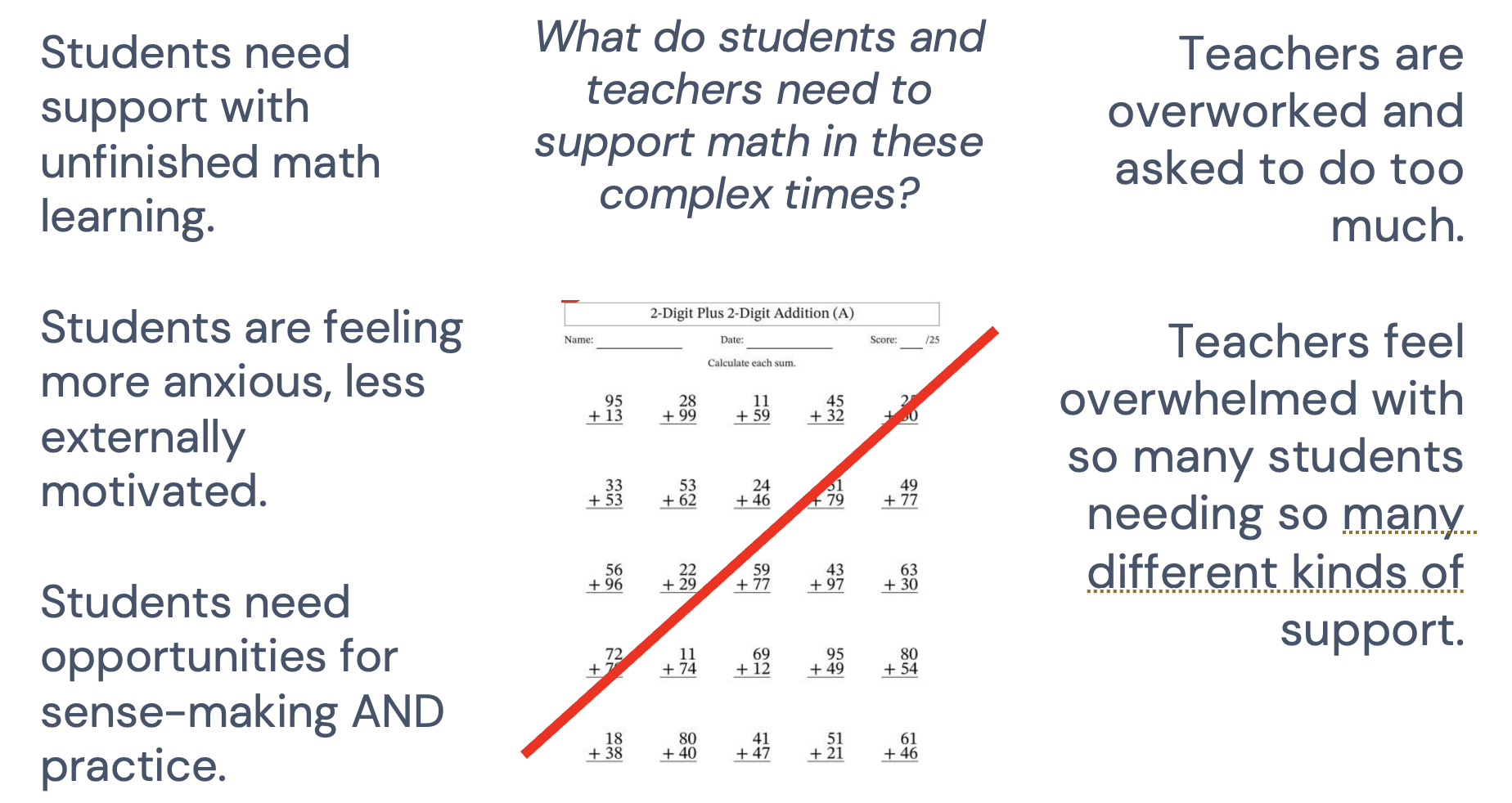
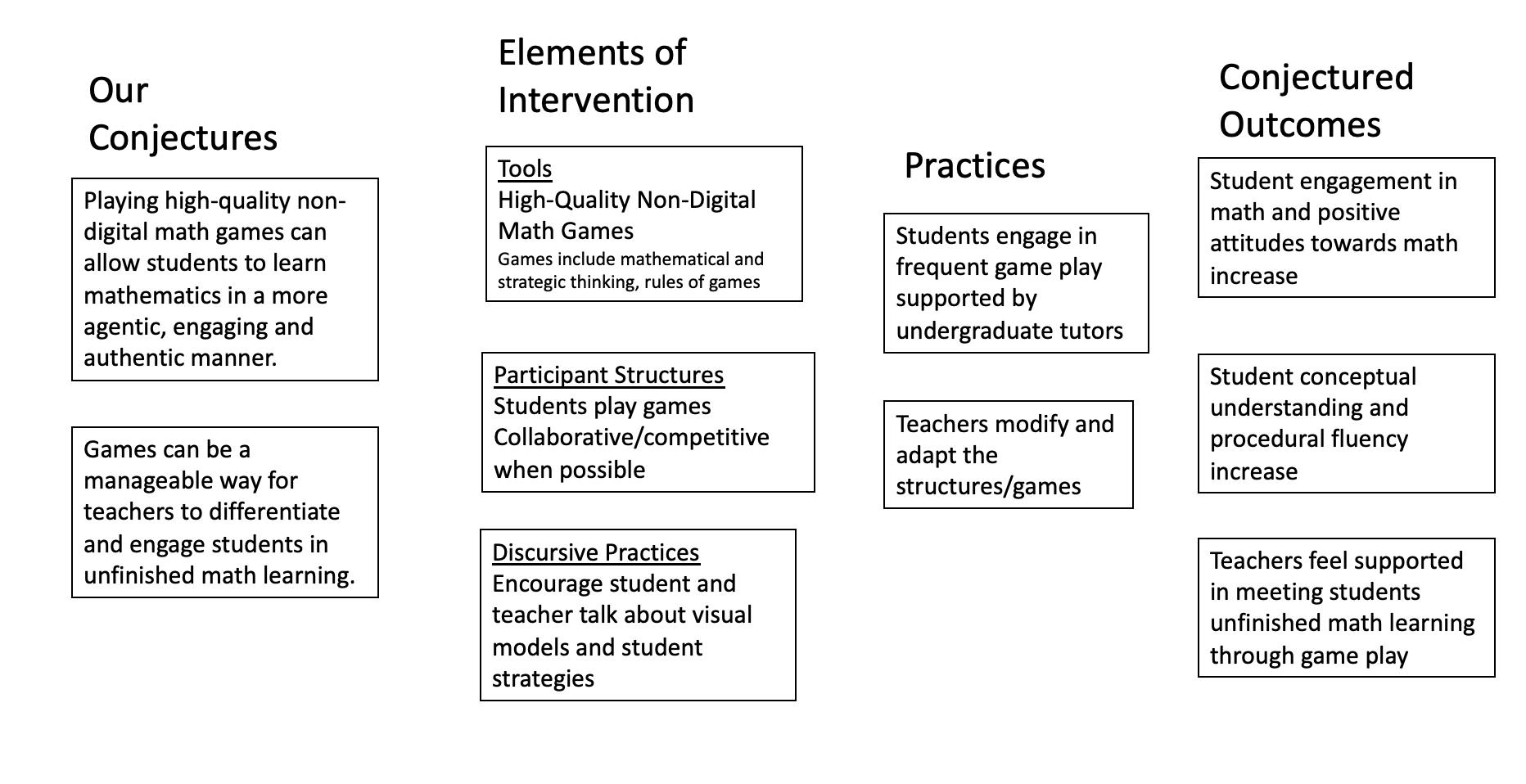
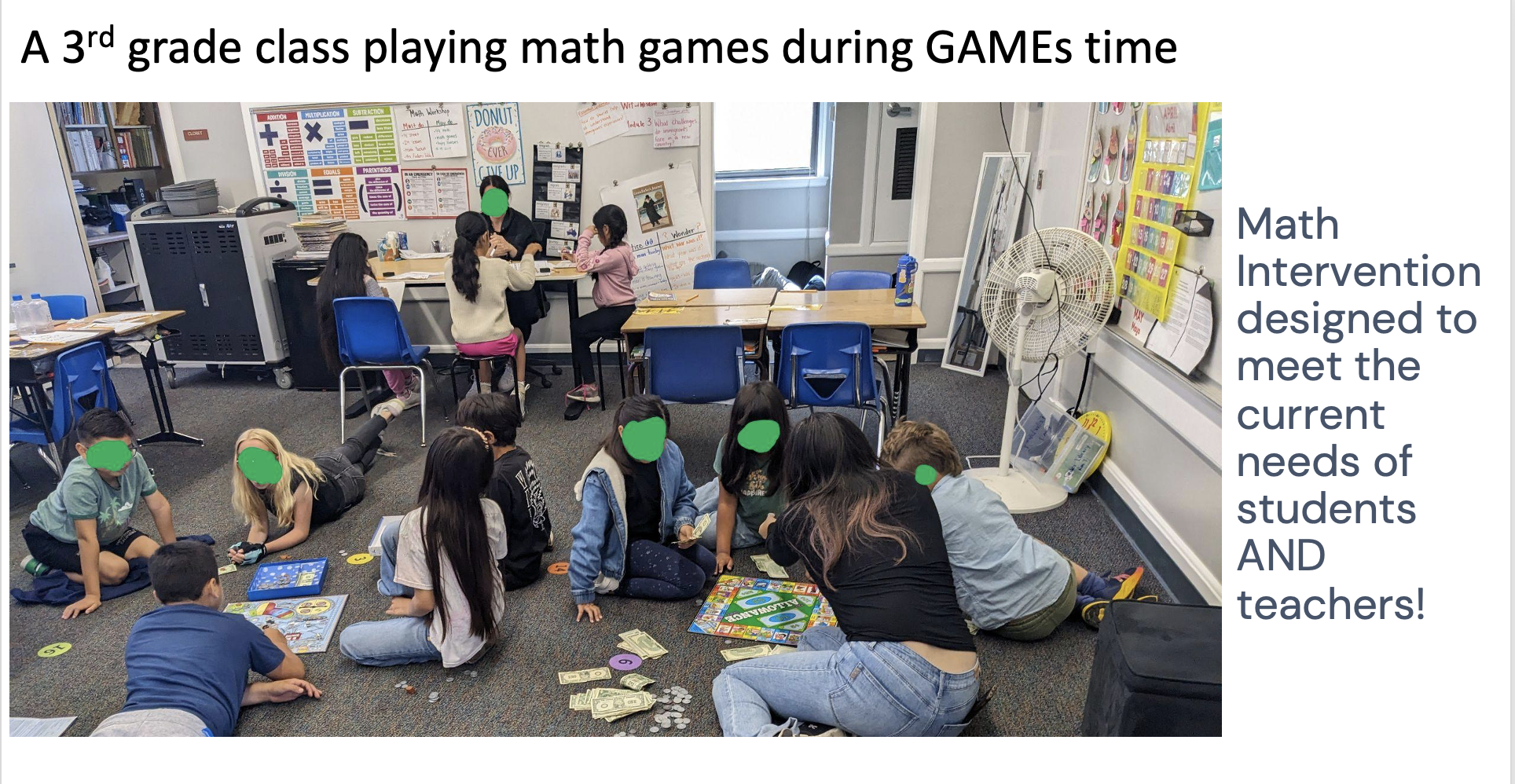
In an effort to bring joy to math intervention by using non-digital games that are fun and accessible for all students, whether or not they have been identified as being “in need of intervention,” we provided a library of board and card games to 11 classrooms of third and fourth grade students. Using design research methodology, we conducted observations and semi-structured interviews to understand how teachers implemented the board games in their classrooms, which games they found valuable and why, and what barriers they faced. In this paper we report teacher perceptions of the impact of Game Time. Teachers observed their students developing more positive relationships with mathematics, and games allowed students to practice procedural fluency in an engaging way.
Participants
226 3rd and 4th grade students and 11 classroom teachers.
School demographics are roughly 75-80% Latino/a, with almost 80% qualifying for free or reduced lunch, roughly 15% of students have a disability, roughly 40% of students are labeled as multilingual.
Study design
Participating teachers were given a library of 12-15 math games with a short session of game play as professional development. These teachers agreed to allow students to play games for 30 min., twice a week. Undergraduates from UCSB visited the classrooms during those times to play games with students. This data comes from year 2 of the study.
Data Collection/Analysis:
- Field Notes from undergraduate tutors and graduate researchers (thematic analysis, analysis by games)
- Math Assessments on targeted skills (pre and post)
- Standardized tests (growth of students, comparison with schools that did not use Game Time, analysis using fidelity measures)
- Attitude/math anxiety survey (we did not use results)
- Teacher interviews (thematic analysis)
- Student interviews (thematic analysis)
Teacher Interviews
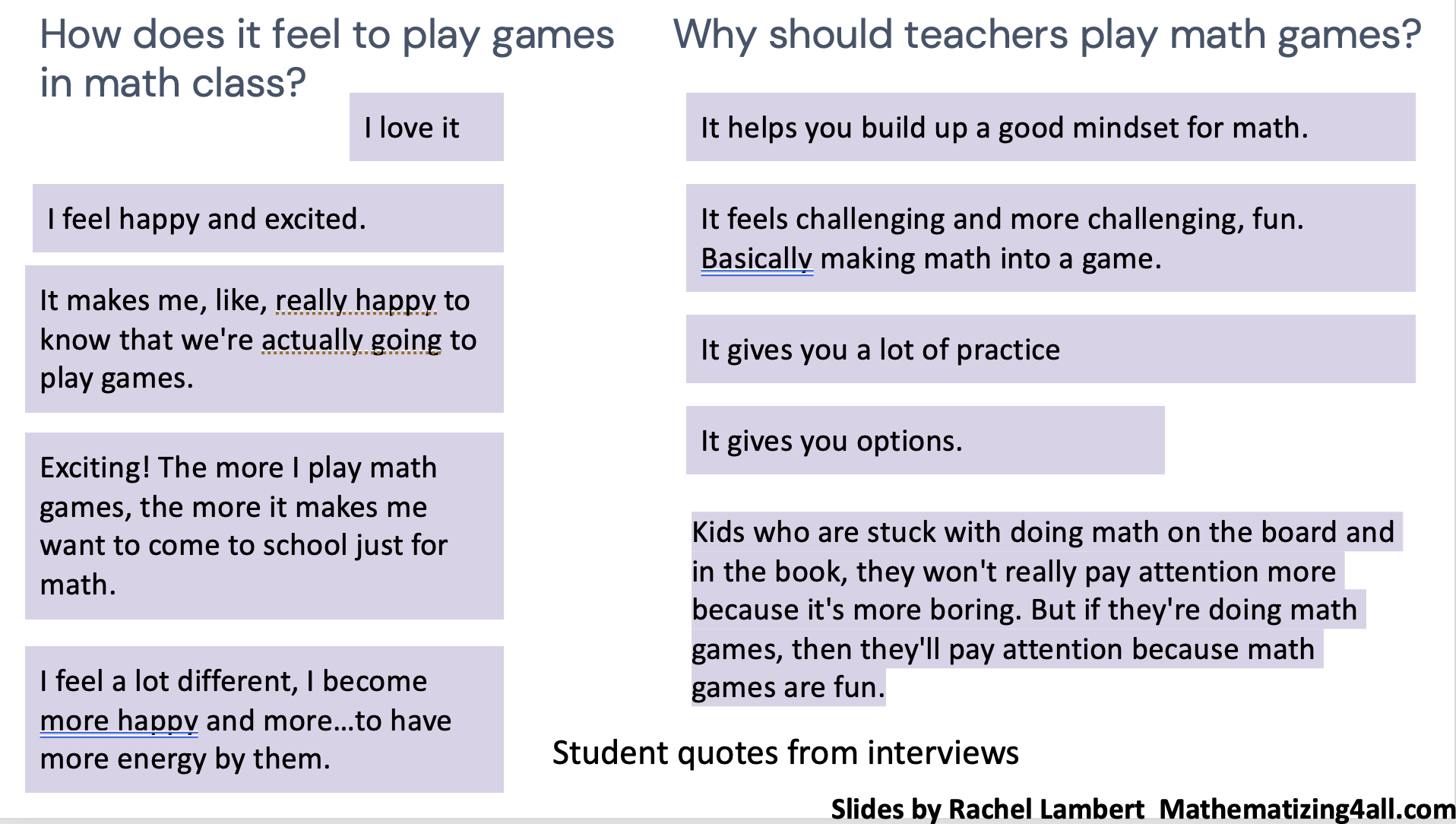
- Teachers reported a positive difference in student attitudes towards mathematics, evidenced by students wanting more time to play games.
- “when we didn’t have it [Game Time], it was like, “awww, regular math”; you know. So overall, just having a positive attitude toward math was a huge shift.”
- “I believe it lowers their anxiety level, you know, and plus they want to – what child doesn’t want to play a game? So when you bring up oh we’re going to do this in this format, you know the kids just naturally are like, ‘I’m in, I’ll do it. I’ll try.’ You know, I’ll at least try. Which, sometimes, children if you if you were to say, oh, I’d like you to do this and this is how we’re going to do it, it might they might shut down.”
- Games allowed repetition necessary for fluency
- “I think part of it is the repetitive practice. They get a lot of repetition as far as what they’re practicing, but it’s not a worksheet, which they could get repetitive practice doing that. And it’s not timed. And they’re relaxed, so they’re having fun, they’re still doing the work.”
- Games allowed students to engage in topics they may have thought were challenging- like fractions
- “they really get into learning things that they didn’t think they were ready for, like fractions.”
- Elements of the games really matter for this use-case
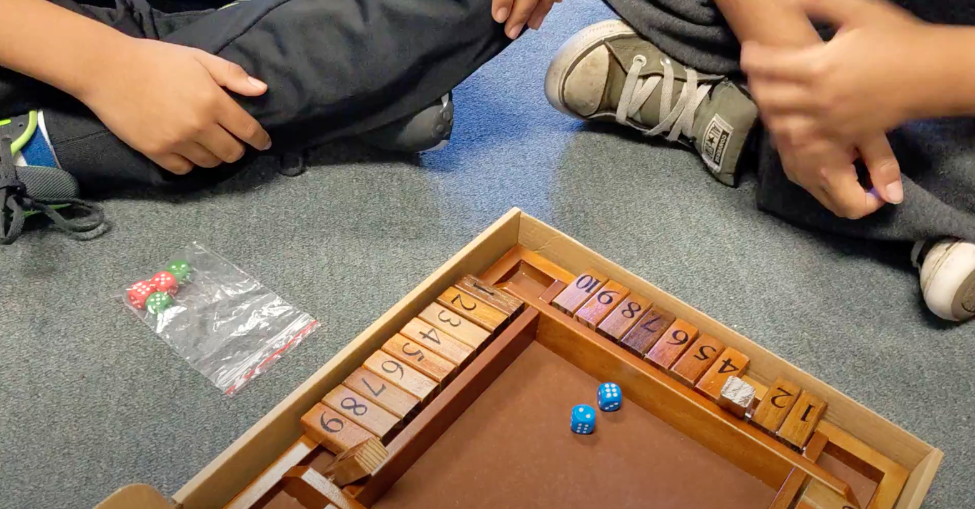
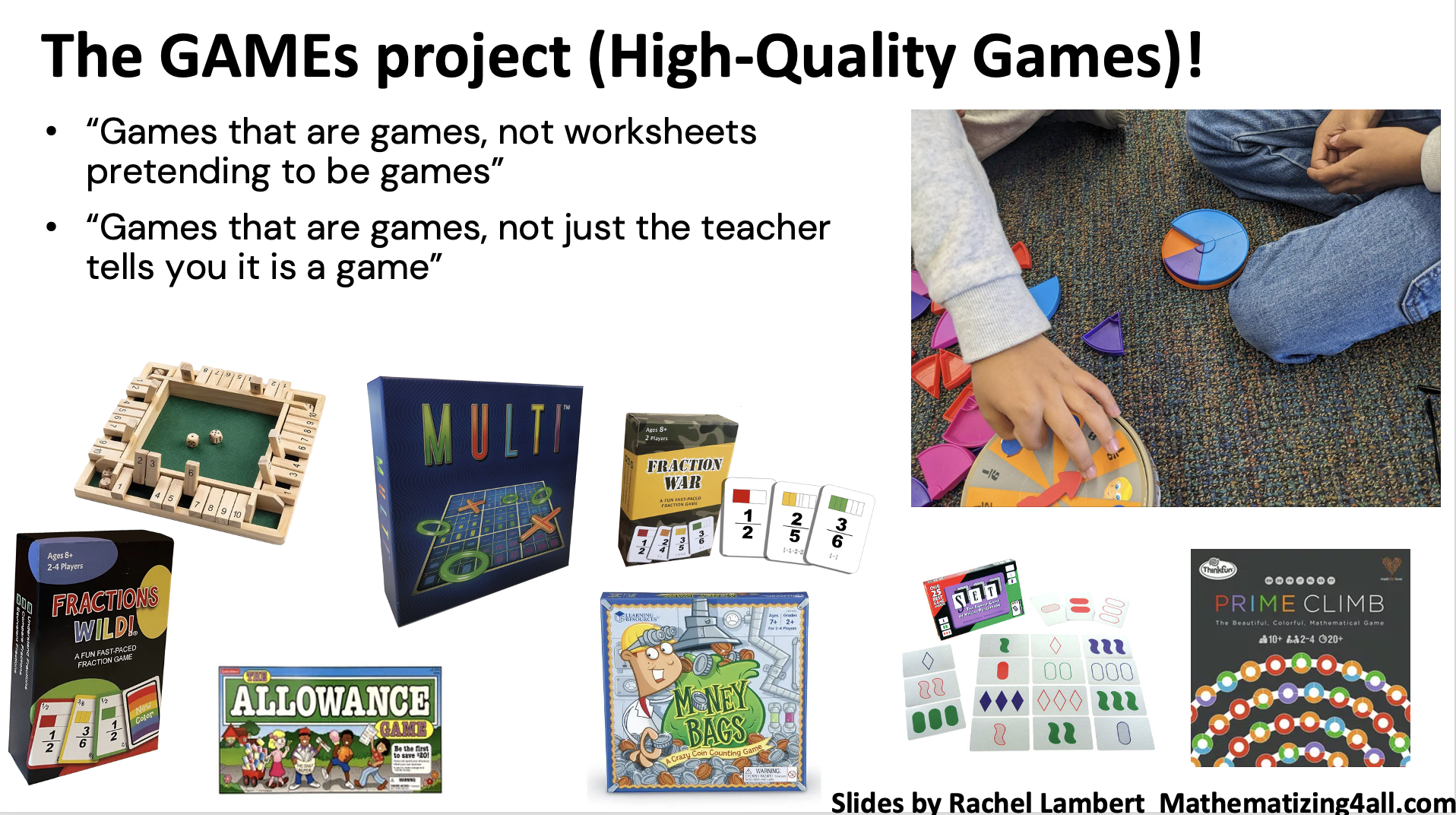
Games need to be game games, or have strategy (not just be a worksheet!) Shut the Box (a British pub game) was successful because students added the dice, yet the game is focused on the strategy for winning, making the fluency element just a part of the game, giving consistent practice on adding sums mentally.
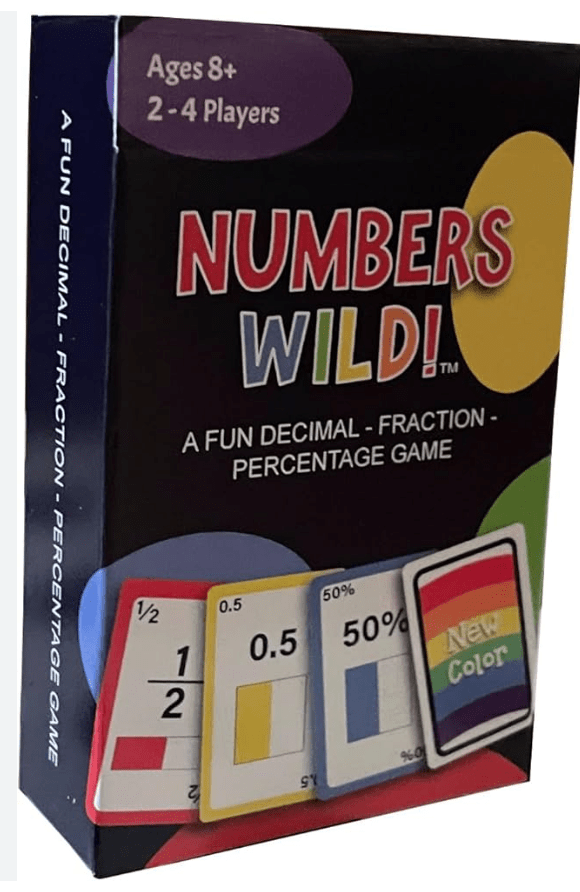
Games based on the play structure of other games (Uno) are useful because students know the rules. An earlier version of this game had only fraction bars, which students might line up to reason with. This version (Numbers Wild) is more complex by using fractions decimals and percents, yet kids can grab and play immediately because of the UNO structure.
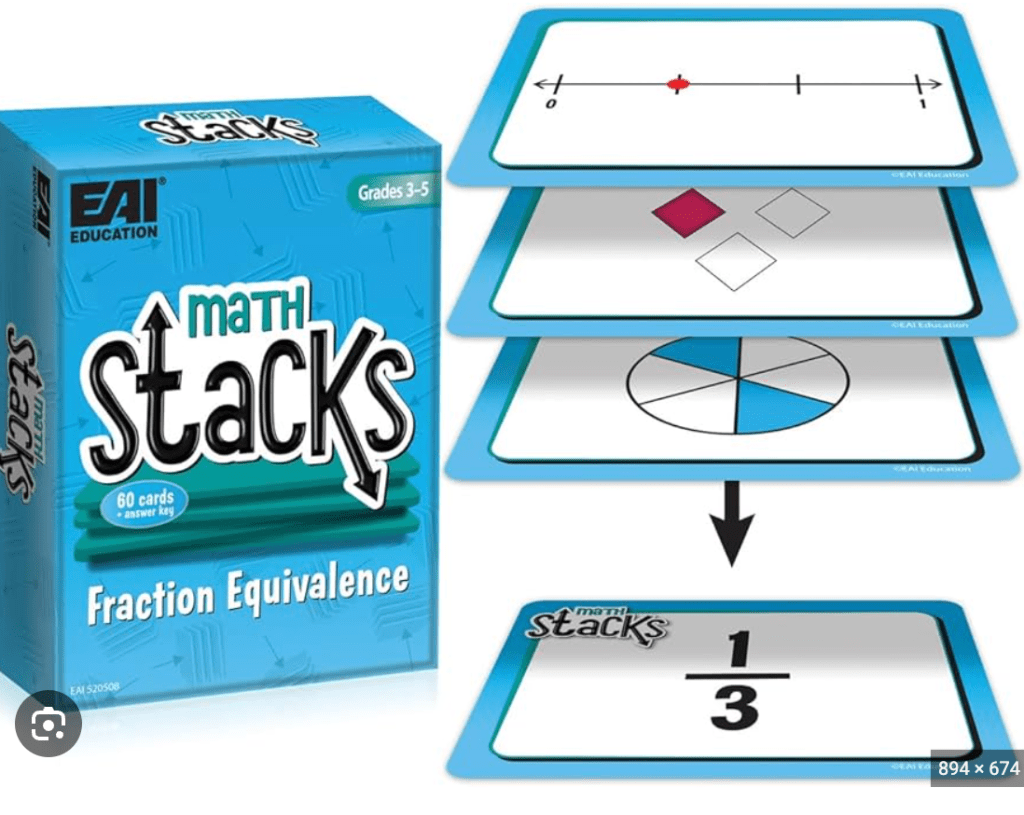
Math Stacks (EAI) was not particularly fun to play, but both students and teachers described this as an effective game to help students learn fractional equivalence. The representations supported learning.
Multi (Joyful Math) was a very popular game with students, teachers and researchers. It is a mega tic tac toe board, where students try to win squares (and block opponents) by picking factors and covering up all the products on the board.
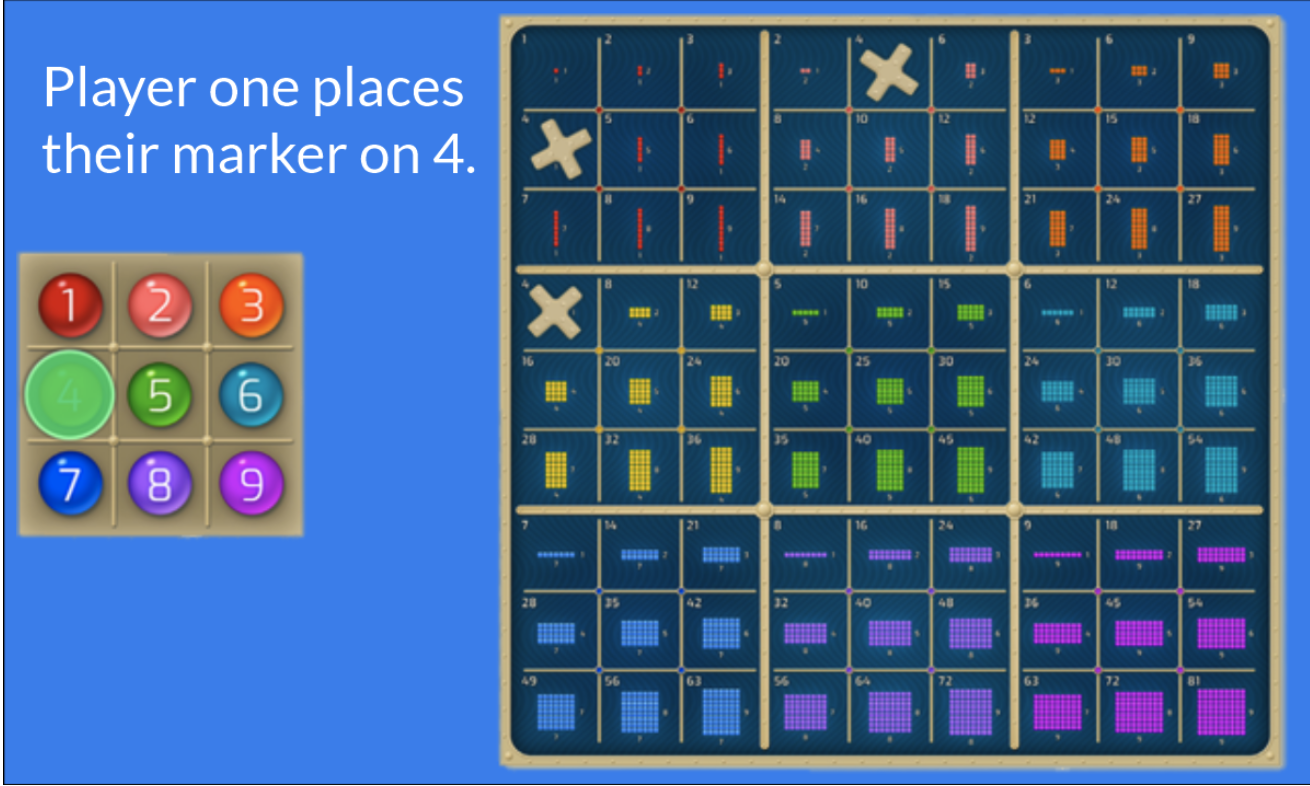
All four of these games had strong visual models that students used to solve the problems in the game. We found that visual models allowed students at wider range of previous knowledge to play together. We also found students were supported by playing in pairs, which could be random. As long as the game supports different ways of engaging in the math, students can play together!
And lastly, the students!
Project extensions:
- We were asked by the special education paraprofessionals to do work with them around games (and access to the games). We have been playing games with them during a PD time.
- We have expanded the work to high school and middle school intervention classes.
- We have expanded also into a middle school special education class for students with moderate support needs.

 mathematizing4all
Leave a reply to John Golden Cancel reply